
 Login
Login Login
LoginChinese Firms in Emerging Industries Double Down on Europe Amid Rising Policy Uncertainty
·About 52 percent of surveyed firms identify EU policy uncertainty as their greatest concern.
·About 72 percent rank policy stability and predictability as their top priority for improvement in the EU market.
·Almost 80 percent plan to expand their investment in the EU over the next three years, with around 15 percent indicating plans for substantial investment increases.
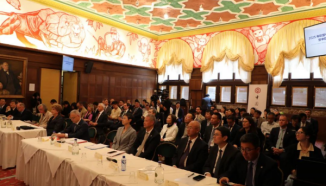
LUXEMBOURG/SHANGHAI, March 24, 2026 -- Defying rising policy headwinds and regulatory hurdles, Chinese enterprises in emerging industries are doubling down on Europe. A new report released in Luxembourg on Tuesday reveals that nearly 80 percent plan to boost investments over the next three years, cementing the EU as a cornerstone of their global strategy.
The report, titled Jointly Shaping the Future of Industrial Innovation Ecosystems: Report on Cooperation and Development of New Quality Productive Forces by Chinese Enterprises in Europe, comes at a defining moment for China-EU economic and trade ties. Geopolitical shifts, rising trade frictions, and evolving EU rules on subsidies, data, and national security are putting the resilience of bilateral engagement to the test.
The report draws on surveys and in-depth interviews with approximately 100 leading Chinese companies in emerging industries, including batteries, electric vehicles, AI, and renewable energy, and examines their operations in the EU. Jointly conducted by the China Chamber of Commerce to the EU (CCCEU), the China Economic Information Service Shanghai Headquarters (CEIS Shanghai), and Xinhua Europe, the study reveals a picture of cautious optimism — rooted in deeper cooperation through what China terms "new quality productive forces", yet tempered by urgent calls for a more stable and predictable regulatory environment in the EU.
Looking ahead, the report calls on both sides to rebuild strategic trust and forge a broader consensus on economic cooperation. This means reaffirming the centrality of economic partnership, resisting the over-politicization of trade, and expanding collaboration in emerging fields like green development and the digital economy. Together, both sides can advance a China-EU industrial innovation partnership, one that deepens industrial integration, builds resilience against 'decoupling' risks, and contributes to a more stable global economic order.
"In Europe, for Europe": Localization Strategy Takes Hold
The report underscores a fundamental shift in how Chinese enterprises approach the European market. Rather than treating Europe as merely an export destination, firms are increasingly adopting an "In Europe, for Europe" localization strategy — creating jobs, transferring technology, and embedding themselves within regional supply chains.
Workforce data illustrates this trend: approximately 30 percent of surveyed companies now employ more than 60 local staff, and nearly 80 percent plan further recruitment. More than 20 percent expect to add more than 50 local jobs and over 10 percent anticipate large-scale hiring exceeding 200.
Sustainability is another area of convergence. Many Chinese enterprises are strengthening their environmental, social, and governance (ESG) frameworks, with some achieving top-tier ratings and establishing dedicated ESG teams in Europe.
New Quality Productive Forces Drive Cooperation Potential
The report identifies significant opportunities for deeper cooperation in areas of what China calls "new quality productive forces", which refer to emerging sectors driven by innovation, characterized by high technology, high efficiency, and high quality.
"The results reveal broad consensus among Chinese enterprises in Europe regarding the substantial opportunities for future cooperation" in these industries, the report said, highlighting advanced manufacturing, renewable energy, new energy vehicles, information and communications technology, and the digital economy as prime areas for synergy.
Evidence points to a powerful reality: China and the EU have highly complementary industries, laying a strong groundwork for expanded cooperation.
Chinese investment in Europe has grown increasingly diversified in recent years, now spanning 18 industrial sectors , based on China’s national classification standard (GB/T 4754), according to the report. Among surveyed companies, three sectors stand out: new energy vehicle (NEV) and auto-parts manufacturers lead at over 25 percent, followed by firms in information transmission, software, and IT services (15 percent) and renewable energy enterprises (13 percent) — spanning solar, wind, and hydrogen. This distribution signals a strategic shift toward high-tech and green industries.
Policy Uncertainty Emerges as Top Concern
However, the report also exposes growing anxieties about the European business environment. More than 52 percent of respondents identify EU policy uncertainty as their greatest concern, surpassing cultural differences, geopolitical risks, and market access barriers.
Specific regulatory frameworks cited as having significant operational impact include:
· EU General Data Protection Regulation (GDPR): 48.94 percent of respondents
· EU Foreign Subsidies Regulation (FSR): 34.04 percent
· EU anti-subsidy measures on electric vehicles: 27.66 percent
· EU Batteries Regulation: 25.53 percent
The FSR, in particular, has emerged as one of the most significant systemic challenges, introducing new restrictions on foreign enterprises' participation in public procurement processes and creating operational barriers for Chinese firms.
The report noted that "rising uncertainty" has become a recurring theme, particularly in sectors like new energy, IT, and healthcare, where regulatory shifts can quickly reshape market conditions.
"Stakeholders emphasized the need for a stable, equitable, and predictable regulatory environment," the report said.
Investment Geography Shifts: Western Europe Regains Appeal
The report reveals evolving preferences in investment location choices. While Central and Eastern Europe (CEE) countries such as Hungary, Poland, and the Czech Republic have historically attracted significant Chinese investment due to competitive operating costs, their appeal has begun to moderate.
Challenges in the CEE region include intensifying competition for industrial land, rising property prices, and tightening labor availability. By contrast, Western Europe continues to attract strong interest, with 38.3 percent of surveyed companies viewing Germany, France, the Netherlands, Belgium, and Luxembourg as attractive investment destinations. Despite slower economic growth, Western Europe's stable legal and policy environments—combined with government initiatives supporting green transition and digital transformation—offer relatively favorable conditions.
Approximately 44.5 percent of companies report no fixed geographic preference, selecting destinations primarily based on project-specific needs.
U.S. Policy Shifts Have Limited Impact on Europe Strategy
Notably, the report suggests that Chinese companies' strategies in Europe are becoming increasingly independent of U.S. policy fluctuations. Despite the U.S. administration's "America First" policy and higher tariff measures introducing significant uncertainty into global trade, most surveyed Chinese enterprises continue to value the European market for its economic scale, unified regulatory framework, and expected strategic autonomy.
"Their expansion reflects intrinsic strategic considerations rather than short-term responses to geopolitical developments," the report noted.
Calls for CAI Ratification and Enhanced Dialogue
Looking ahead, Chinese enterprises express strong hopes for improved bilateral frameworks. Many respondents hope the EU will restart the ratification process of the EU-China Comprehensive Agreement on Investment (CAI) and strengthen high-level exchanges with China to provide clearer strategic direction for economic cooperation.
More than 72 percent of respondents rank policy stability and predictability as their top priority for improvement in the EU market. Other areas where companies hope to see progress include tax policy, non-tariff barriers, and market access conditions.
In response to perceived challenges, nearly 60 percent of respondents plan to increase investment in brand building and corporate image over the next three years, while nearly 40 percent plan to expand local manufacturing capacity.
Institutional Continuity Reflects Mature Market Presence
The report indicates a high degree of institutional continuity among Chinese enterprises in the EU. More than half of surveyed firms have maintained operations in Europe for over a decade, reflecting a mature and stable market presence. An additional 40 percent have been active for more than three years, while only 6 percent are recent entrants with less than one year of operations.
This longevity stands in contrast to the narrative of fleeting or opportunistic investment, suggesting that Chinese companies view Europe as a core component of their long-term global strategy despite tactical adjustments to their investment approaches.
Looking Ahead: Cautious Optimism Prevails
Business expectations for the future of China-EU economic cooperation remain cautiously optimistic.
Almost 80 percent of surveyed firms intend to ramp up investment in the EU in the coming three years, including around 15 percent eyeing "substantial increases", while approximately 20 percent reported no plans for additional investment. Notably, none expressed intentions to scale back their presence in the region.
Looking ahead, more than 60 percent of surveyed firms expect their revenues in the EU to continue growing, including around 32 percent anticipating growth above 10 percent, while about 5 percent expect revenues to decline.
The report’s core message is clear: despite a complex operating environment, Chinese enterprises see Europe not as a temporary stop but as a long-term partner — provided Brussels delivers the "stable, equitable and predictable" policy framework they crave.
While the return of protectionist trade policies and tariff measures poses challenges to global supply chains, it simultaneously offers the EU and China a moment of reflection to recalibrate their economic relationship.
The report calls on both sides to rebuild strategic trust, forge a broader consensus on economic cooperation and expand collaboration in emerging fields of "new quality productive forces" like green development and the digital economy. The coming years will test whether policymakers on both sides can turn that potential into reality.
 2026 New Quality Productive Forces & Cross - Border Finance Forum Successfully Held in Luxembourg
 2025 China-EU Business Forum Draws 100+ Companies


