
 Login
Login Login
LoginCCCEU Statement on the European Commission's Summary Notice on an In-depth FSR Investigation into a Chinese Enterprise
CCCEU Statement on the European Commission's Summary Notice on an In-depth FSR Investigation into a Chinese Enterprise
January 23, 2026, Brussels
The China Chamber of Commerce to the EU (CCCEU) has noted the publication of the Summary Notice in the Official Journal of the European Union on January 23, 2026, concerning the European Commission’s initiation of an in-depth investigation into Nuctech under the Foreign Subsidies Regulation (FSR).
The CCCEU believes that against the backdrop of high uncertainty in the global economic and trade environment and a significant increase in compliance costs for cross-border business operations, the enforcement approach of the FSR not only affects the fairness of individual case handling but will also directly impact the openness of the EU market, the predictability of its rules, and the credibility of its institutions. The CCCEU expresses its concerns regarding the relevant developments under the FSR by the European side and the "determinations" in the mentioned Summary Notice.
The CCCEU expresses concerns about the enforcement direction disclosed in this report, including the preliminary determinations regarding "categories of subsidies", inferences about "transferability of resources / cross-subsidization", the assessment of competitive impact in public procurement tenders, and the enforcement risks of the FSR.
The Chamber reiterates the following core principles:
Firstly, the implementation of the FSR must consistently adhere to evidence-based and procedurally prudent principles, exercising discretionary powers with restraint.
The FSR grants the European Commission excessive discretionary powers, and the negative impact of the selective use of "dawn raids" against relevant Chinese enterprises remains profound. The Chamber believes that in-depth investigations should not replace rigorous proof with "suspicion" or policy objectives. The Commission's practice of inferring that an enterprise may transfer relevant benefits to its operations within the EU internal market based on factors such as corporate ownership structure, intra-group economic and organizational links, the scale of subsidies, the importance of price competition, and the "lack of credible legal or economic factors preventing the transfer of resources" may be unfair.
Determinations of subsidies and competition distortion should be based on verifiable evidence and rigorous economic analysis, not on "presumption of guilt" or inappropriate shifting of the burden of proof. Tax incentives, R&D funding, and industrial support instruments are common in major global economies. Determining whether they constitute specific subsidies and establishing a demonstrable causal link with competition outcomes in the EU market all require factual proof in concrete cases and should not be prejudiced by non-economic narratives.
In the analysis of "cross-subsidization" or "transferability of resources": There is an essential difference between "possible transfer" and "actual transfer causing competitive distortion". Intra-group fund arrangements, cost allocations, R&D synergies, and intellectual property ownership are generally subject to strict constraints by accounting standards, audit requirements, tax rules, and business logic. We urge the European side to base relevant analyses on real, verifiable facts, avoiding the substitution of inferences for evidentiary review.
Secondly, determinations of "unfair advantage" in the field of public procurement must ensure a balanced burden of proof and should not force enterprises to prove that their "advantage is completely unrelated to any support."
The CCCEU emphasizes that outcomes in public procurement competitions depend on multiple factors including technical performance, reliability, total lifecycle cost, after-sales service, delivery capability, and compliance record. Requiring enterprises to prove that their competitive advantage in a tender is "completely unrelated" to any potential subsidy would impose an unreasonable burden and could stifle competition.
We support the objective and auditable assessment of bids and pricing but oppose equating "winning a tender / price advantage" simplistically with "unfair competition caused by subsidies". We expect the European side to adhere to an empirical approach in procurement-related analyses, ensuring that enterprises have sufficient procedural rights and reasonable opportunities for explanation and defense.
Thirdly, key procedural steps such as the "balancing test / remedial measures" must provide actionable criteria and adequate procedural safeguards, preventing enterprises from having to respond passively under conditions of information asymmetry.
The investigation process must ensure procedural fairness and reasonable information disclosure, enabling enterprises to effectively exercise their rights to hearings and defense. Any discussion of remedial measures must be based on full factual findings and the principle of proportionality.
The CCCEU will continue to closely monitor the progress of the case. We are willing to maintain communication with European institutions and all stakeholders, promoting dialogue based on facts and rules, fostering a fair, transparent, and non-discriminatory market environment, and contributing to the long-term stability and healthy development of China-EU economic and trade relations.
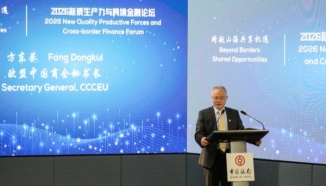 2026 New Quality Productive Forces & Cross - Border Finance Forum Successfully Held in Luxembourg
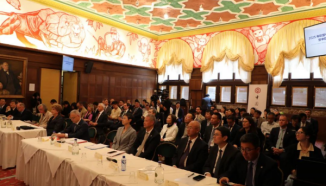 2025 China-EU Business Forum Draws 100+ Companies


