 Login
 Login
Statement: CCCEU Welcomes Progress Made at the Second China–EU Trade and Investment Consultation Mechanism Meeting
Statement: CCCEU Welcomes Progress Made at the Second China–EU Trade and Investment Consultation Mechanism Meeting
Brussels, Belgium | 9 October 2026
The second meeting of the China–EU Trade and Investment Consultation Mechanism (TIC) was held in Beijing on 8–9 October 2026. The China Chamber of Commerce to the EU (CCCEU) welcomes the tangible outcomes achieved by both sides, as reflected in the agreed list of outcomes and consensus covering trade and investment, export controls, intellectual property and World Trade Organization (WTO) reform.
The CCCEU believes these outcomes reflect the shared willingness of both sides to address trade frictions and stabilise bilateral economic and trade relations through institutionalised dialogue. They also send a positive signal to the international community in support of the multilateral trading system and a rules-based international trade order.
The CCCEU also welcomes the commitment to maintain regular, institutionalised communication, including a ministerial-level video conference in January 2027 and the third meeting of the Mechanism in March 2027.
The CCCEU welcomes the agreement to continue exploring the possibility of reducing tariffs on certain goods in accordance with WTO rules, while strengthening communication and cooperation under the trade monitoring mechanism and making fuller use of dialogue to address trade concerns.
In the automotive sector, the CCCEU welcomes the understanding reached on hybrid vehicle trade in a manner consistent with WTO rules, as well as the commitment to continue work on price undertakings and related review procedures in the EU's anti-subsidy investigation into Chinese electric vehicles. These developments mark further progress towards a more structured approach to addressing China–EU automotive trade issues. The CCCEU expects the relevant arrangements to provide Chinese-invested automotive companies operating in Europe with greater clarity and predictability, reduce market uncertainty and support a stable environment for China–EU business cooperation.
The CCCEU warmly welcomes the agreement to hold technical dialogue on the EU Foreign Subsidies Regulation (FSR). Since the Regulation entered into force, Chinese-invested companies operating in Europe have faced considerable compliance burdens and uncertainty. The CCCEU expects the dialogue to deepen mutual understanding of the respective regulatory frameworks, enhance transparency and predictability in the implementation of the FSR, and help avoid unnecessary disruption to legitimate business activities.
The CCCEU considers the commitment to continue dialogue on market access for medical devices a constructive step. China's measures to expand imports of EU medical devices, including a procurement matchmaking event planned for the ninth China International Import Expo (CIIE), demonstrate its commitment to further opening up its market. At the same time, the CCCEU calls on the EU to ensure a fair, transparent and non-discriminatory environment for Chinese-invested companies seeking access to public procurement markets, including in the medical device sector.
On export controls, the CCCEU notes the understandings reached through the bilateral dialogue mechanism on advance notification before listing, greater transparency in listing and delisting procedures, and support for initiating delisting procedures under the respective legal frameworks. The CCCEU welcomes the EU's commitment to continue working with its Member States to facilitate key Chinese licensing cases involving dual-use items. The CCCEU expects this commitment to translate into concrete action, with clear and predictable licensing procedures that enable Chinese-invested companies operating in Europe to conduct legitimate and compliant trade.
Regarding inverter projects, the CCCEU notes the EU's clarification that its financing guidance document does not target specific countries. The CCCEU welcomes the agreement to continue consultations on this issue and calls on the EU to avoid an overly broad application of security considerations and adopt a technology-neutral approach to cybersecurity. This is essential to ensuring that Chinese-invested companies operating in Europe are not subject to discriminatory treatment under the guidance.
The CCCEU further notes that consultations will continue on a range of issues, including the recognition of regionalisation principles, restrictions on imports related to bluetongue disease, computer reservation systems, and the regulatory frameworks for cosmetics and pharmaceuticals. Both sides also agreed to explore investment cooperation and discuss areas for future-oriented cooperation. The CCCEU views two-way investment as an important stabilising factor in China–EU economic and trade relations and expects both sides to move promptly towards identifying concrete areas and modalities for cooperation. Progress in this regard would help create a more stable, transparent and predictable policy environment for Chinese companies investing in Europe.
The CCCEU welcomes the progress made in discussions on intellectual property and WTO reform and looks forward to the effective implementation of the relevant understandings. Effective follow-through would help foster a fairer, more transparent and more predictable rules-based environment for Chinese-invested companies operating in Europe.
The CCCEU will continue to serve as a bridge between Chinese-invested companies and European stakeholders, maintaining constructive engagement with all relevant parties on the compliance and market access challenges facing businesses in Europe.
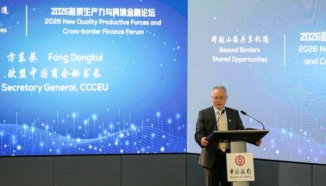 2026 New Quality Productive Forces & Cross - Border Finance Forum Successfully Held in Luxembourg
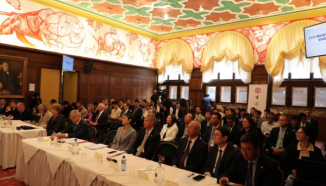 2025 China-EU Business Forum Draws 100+ Companies


