
 Login
Login Login
LoginThe CCCEU Comments on the European Commission's Proposed "Public Procurement Regulation"
The CCCEU Comments on the European Commission's Proposed "Public Procurement Regulation"
Brussels, 9 September 2026
The China Chamber of Commerce to the EU (CCCEU) hastaken note of the European Commission's legislative proposal for a Public Procurement Regulation.
The proposed regulation includes measures to simplify existing rules and promote digitalisation in public procurement, which could contribute to greater efficiency and transparency in public procurement procedures.
However, the Chamber is highly concerned about the provisionsregarding "European preference", third-country market access and supply chain security, as well as the interaction with other EU legislation relevant to public procurement, including the Net-Zero Industry Act, the International Procurement Instrument (IPI) and the future Industrial Accelerator Act (IAA). We are strongly opposed to any measures that would exclude or restrict third-country companies from participating in EU public procurement on the basis ofso-called non-market factors, such as the country of origin of the company, including where such measures are justified on grounds of economic security or reducing supply chain dependencies.
The proposed "European preference" , whether applied on a voluntary or mandatory basis, could, when combined with other sector-specific legislation, exclude Chinese companies or create excessively high market access barriers in areas such as net-zero industries, healthcare, automotive, rail or maritime infrastructure, and ICT on non-technical grounds. This could distort a level playing field for Chinese companies participating in the European public procurement market.
At present, Chinese companies already face significant market access barriers in EU public procurement in a number of areas, including infrastructure, equipment manufacturing and the green economy, as a result of the IPI, the Foreign Subsidies Regulation (FSR), as well as measures adopted by certain Member States on security grounds. In some cases, exclusionary practices have also emerged.
We call on the European Commission to take a prudent approach to policy directions concerning "European preference" and restrictions on third-country market access when advancing the Public Procurement Regulation. Any such measures should be based on clear, objective, transparent and verifiable criteria, while respecting the principle of proportionality and the EU's international trade obligations.Public procurement should not discriminate against suppliers or goods on the basis of the supplier's nationality or the country of origin of the goods.
Chinese investors have established around 3,000 companies acrossthe EU, making long-term investments in the EU and developing local production, R&D and service operations, while creating jobs and complying fully with EU laws and regulations. European policymakers should duly consider the actual operations of Chinese companies in Europe and their contributions to local economies, rather than assessing their eligibility for and participation in public procurement simply on the basis of their country of origin or other non-technical factors.
The CCCEU looks forward to continued engagement between the EU institutions and the business community throughout the legislative process, and to the views of businesses being fully taken into account regarding the practical impact of the proposed rules. We hope that the new public procurement framework will further enhance market transparency, predictability and regulatory clarity, while providing a fair and stable environment for companies of all origins to participate in public procurement. The CCCEU stands ready to continue engaging constructively with all stakeholders, including the EU institutions, on these issues.
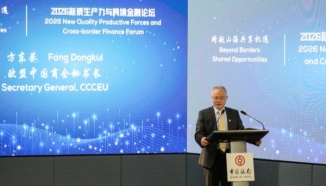 2026 New Quality Productive Forces & Cross - Border Finance Forum Successfully Held in Luxembourg
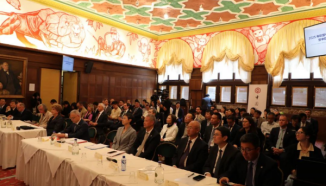 2025 China-EU Business Forum Draws 100+ Companies


