
 Login
Login Login
LoginCCCEU Submits Feedback to European Commission on Proposed Industrial Accelerator Act
The China Chamber of Commerce to the EU (CCCEU) on June 18 submitted its formal feedback to the European Commission on the proposed Industrial Accelerator Act (IAA), expressing systemic concerns regarding provisions related to public procurement restrictions, foreign investment conditions, and legal uncertainty, while putting forward specific amendment proposals.
Representing more than 1,000 Chinese-invested enterprises operating across the EU in sectors including automotive manufacturing, renewable energy, the digital economy, logistics, and advanced technologies, the CCCEU noted that while the IAA aims to strengthen EU industrial competitiveness and accelerate the energy transition, several of its provisions risk producing counterproductive effects.
Multiple concerns: public procurement restrictions combined with investment barriers
In the area of public procurement, the CCCEU pointed out that Articles 11 and 12 of the proposed IAA, together with the amendments to the Net-Zero Industry Act (NZIA), introduce far-reaching exclusions of economic operators from certain third countries from public procurement procedures and public support schemes, while granting preferential treatment to GPA parties, FTA partners, and Customs Union partners. This approach raises serious concerns about market access, non-discrimination, and WTO consistency.
In terms of regulatory complexity, the proposed IAA's stringent investment approval frameworks and restrictive conditions risk diverting investment to jurisdictions with more predictable regulatory environments. Local content requirements and exclusionary criteria will increase costs and undermine competitiveness, with these costs ultimately passed on to European consumers, slowing the uptake of green technologies.
Industrial policy that disregards global supply chain realities will be unable to sustain long-term investment. The advanced manufacturing sectors covered by the proposal rely on complex international networks of suppliers and specialized technologies. Measures that constrain these networks risk increasing production costs, reducing operational efficiency, and discouraging industrial acceleration. Reduced competition leads to reduced competitiveness — imposing additional obligations on foreign investors creates an uneven playing field and limits the ability of EU-based companies to benefit from global innovation networks.
The proposal also fails to address the underlying structural challenges facing EU energy-intensive industries — high energy costs, overregulation, labour shortages, and declining innovation dynamics. By shielding parts of the market from international competition and placing additional hurdles on foreign investors, the IAA risks destabilising rather than resolving the challenges facing EU industrial growth.
Furthermore, several core concepts underpinning the proposed IAA — including "foreign direct investment", "control", and "Union asset" — remain insufficiently defined. The interaction between Articles 17, 18, and 19 creates confusion regarding ownership thresholds, investment aggregation rules, and potential retroactive application, creating substantial legal uncertainty that could delay strategic investment decisions.
Public procurement: high-value contracts only, exemption mechanisms, and derogations
The CCCEU proposes that exclusionary clauses in public procurement be limited to high-value contracts (e.g. above €250 million), with exemptions for third-country economic operators that are already established in the EU, operationally independent, and deeply integrated into local supply chains. The Chamber also calls for broader application of existing derogations. In addition, the CCCEU stresses the need to clarify and harmonise the definition of "public support schemes" under Article 12 to avoid divergent interpretations across Member States that could distort the Single Market.
With regard to the "Union origin" requirements, the CCCEU notes that the proposal merely refers to the non-preferential origin rules in the Union Customs Code, under which product-specific origin rules are extremely limited. For most products, the only legally binding origin rule is the "last substantial processing" criterion under Article 60(2) of the Union Customs Code, which is open to interpretation and has not been harmonised at EU level — as evidenced by numerous court cases over the past decades. The CCCEU calls for clearer definitions and rules of application for Union origin requirements, as well as clarification of the product scope under Annex II. In the solar PV sector, the Chamber recommends distinguishing between central inverters and string inverters.
For Battery Energy Storage System (BESS) and solar PV products, the CCCEU recommends extending the phase-in period for Union origin requirements from the current one to three years to three and a half to seven years. The Chamber notes that there is virtually no domestic manufacturing of battery management systems in the EU, and battery production capacity is severely insufficient. Constructing new factories and ramping up yields takes considerable time, making a short-term mandatory switch of suppliers technically and practically unfeasible. The CCCEU also emphasises that equivalence granted to GPA parties, FTA partners, and Customs Union partners should be applied on a non-discriminatory basis to all economic operators meeting the origin requirements, regardless of parent company headquarters or nationality.
FDI screening: Raise trigger threshold, remove 49% ownership cap, exclude greenfield investment
The CCCEU considers that Chapter IV of the IAA would layer new approval requirements on top of existing EU investment screening frameworks, significantly increasing compliance costs and approval timelines. The Chamber recommends raising the investment trigger threshold from €100 million to €500 million, increasing the "control" threshold from 30% to 50%, and explicitly excluding greenfield investments and R&D projects from the scope of the screening mechanism. The CCCEU also calls for the removal of the 40% global manufacturing capacity-based nationality criterion and the carve-out for EPA and FTA partners, or alternatively ensuring that all investments from such partners are exempted regardless of the nationality of the investor.
With regard to the "four-out-of-six" substantive contribution criteria, the CCCEU notes that the ownership cap, mandatory technology licensing, R&D localisation, and supply chain sourcing requirements create discriminatory obstacles for investors from certain countries, including China. The Chamber recommends extending the implementation timeline for these criteria from 12 months to 36 months after entry into force, requiring compliance with only two instead of four criteria, and allowing for a phased implementation over five to seven years. The CCCEU also recommends removing the 49% ownership cap to protect the strategic decision-making authority of technology-leading investors and avoid discouraging the transfer of advanced technologies to the EU.
On investment aggregation and retroactive application, the CCCEU stresses the importance of legal certainty. Investments completed or approved before the entry into force of the IAA should not be aggregated with future investments, and investments implemented in phases should be exempted, with a minimum transitional period of five years. The Chamber also calls for clear definition of the circumstances under which Article 18(4) may require compliance with all six criteria, to prevent national authorities from exercising excessive discretion and to ensure transparency and predictability in investment approvals.
Legal compliance: ensure consistency with EU law and WTO rules
In its concluding remarks, the CCCEU emphasises that several elements of the proposal raise important questions regarding their compatibility with established principles of EU law and the EU's obligations under the WTO framework, which warrant careful scrutiny during the legislative process.
The Chamber calls for careful consideration of the cumulative regulatory burden that may result from the interaction of multiple approval mechanisms, localisation requirements, industrial contribution criteria, ownership-related conditions, and eligibility requirements linked to procurement and public support schemes. Maintaining open investment conditions, technological cooperation, and globally integrated supply chains will be essential for preserving the EU's attractiveness for large-scale manufacturing investment.
The CCCEU emphasises that China-EU industrial cooperation has already made an important contribution to the EU's competitiveness. In sectors such as electric vehicles, battery technologies, and renewable energy, companies from both sides cooperate through investment projects, supply chain partnerships, and joint R&D, supporting the EU's manufacturing capacity, innovation, and supply-chain resilience. Local content rules, industrial contribution criteria, and similar requirements risk undermining existing cooperation and discouraging future investment. The EU and China share important policy objectives, including advancing the global energy transition, accelerating transport electrification, and deploying clean technologies. Measures under the IAA that may effectively disadvantage Chinese companies through procurement conditions, localisation requirements, or investment-related criteria risk weakening cooperation in sectors that are central to achieving these shared objectives.
The CCCEU shares the EU's ambition to build a more competitive, resilient, and clean industrial base. Achieving this ambition will require an open, predictable, and investment-friendly regulatory framework. As the legislative process progresses, the final instrument should promote competitiveness while preserving legal certainty, international cooperation, and an open investment environment — helping the EU strengthen its manufacturing base, attract investment, and accelerate the deployment of clean technologies needed to achieve its long-term climate and industrial goals.
The Chamber calls on the EU institutions to engage closely with industry stakeholders, including business associations, carefully assess the practical implications and compliance risks of the proposed provisions, uphold the principles of fair competition and open markets, and address outstanding concerns through constructive dialogue and consultation.
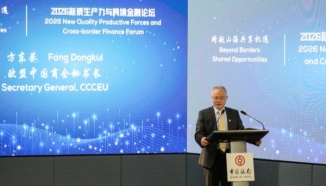 2026 New Quality Productive Forces & Cross - Border Finance Forum Successfully Held in Luxembourg
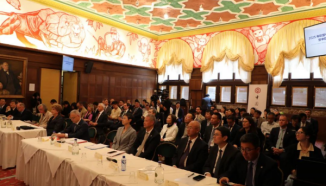 2025 China-EU Business Forum Draws 100+ Companies


