
 Login
Login Login
LoginCCCEU Comments on Reported EU Plans to Exclude Chinese Inverters from EU funds
CCCEU Comments on Reported EU Plans to Exclude Chinese Inverters from EU funds
May 4, 2026, Brussels
The China Chamber of Commerce to the EU (CCCEU) has taken note of reports regarding the EU's decision to restrict the use of Chinese inverters in EU-funded projects. The reported measures appear to constitute an attempt by the EU to impose market restrictions based on the country of origin of enterprises. The CCCEU expresses its concern and opposition, and urges the EU side to refrain from such non-market-oriented practices.
Chinese companies have already faced country-of-origin-based limitations in participating in programmes such as Horizon Europe. If such restrictions were extended to a broader range of EU funding programmes, market access limitations for Chinese enterprises would expand accordingly, driven by discriminatory vendor selection criteria.
Moreover, such measures send a policy signal that may generate clear negative spillover effects on market access expectations, corporate investment decisions, and confidence in industrial cooperation.
Chinese companies continue to value policy stability and predictability. Any further introduction of country-of-origin-based restrictive measures would undermine confidence in the long-term investment environment and run counter to efforts to build a fair, open, and predictable business climate.
In the field of inverters and broader photovoltaic and energy transition technologies, Chinese companies operating in Europe have long competed through technological innovation and market performance, and have established a strong track record of reliability and customer trust. They have also contributed to Europe's green transition by providing competitive and accessible solutions. Many companies remain positive about the European market and are committed to long-term engagement in the region.
We believe that the politicisation and over-securitisation of trade and technology-related issues risks creating unnecessary frictions and spillover effects, which serve no party's long-term interests. Excluding Chinese enterprises would reduce market competition and impact green transition of Europe. The increase in electricity costs due to reduced competition would be passed downstream to households and businesses, thereby eroding overall consumer welfare.
China and Europe share broad common interests in green transition and industrial cooperation. We therefore hope that the EU will adhere to the principle of technology neutrality, avoid non-market barriers, and foster a fair, open, and predictable business environment. Through dialogue and cooperation, both sides can continue to expand common ground and support the stable and healthy development of China–EU economic and trade relations.
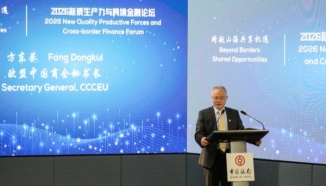 2026 New Quality Productive Forces & Cross - Border Finance Forum Successfully Held in Luxembourg
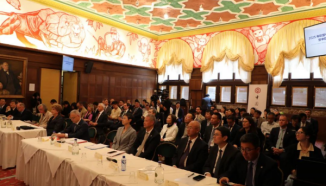 2025 China-EU Business Forum Draws 100+ Companies


